
Flashing vs. Solid Check Engine Light: What Does It Mean?
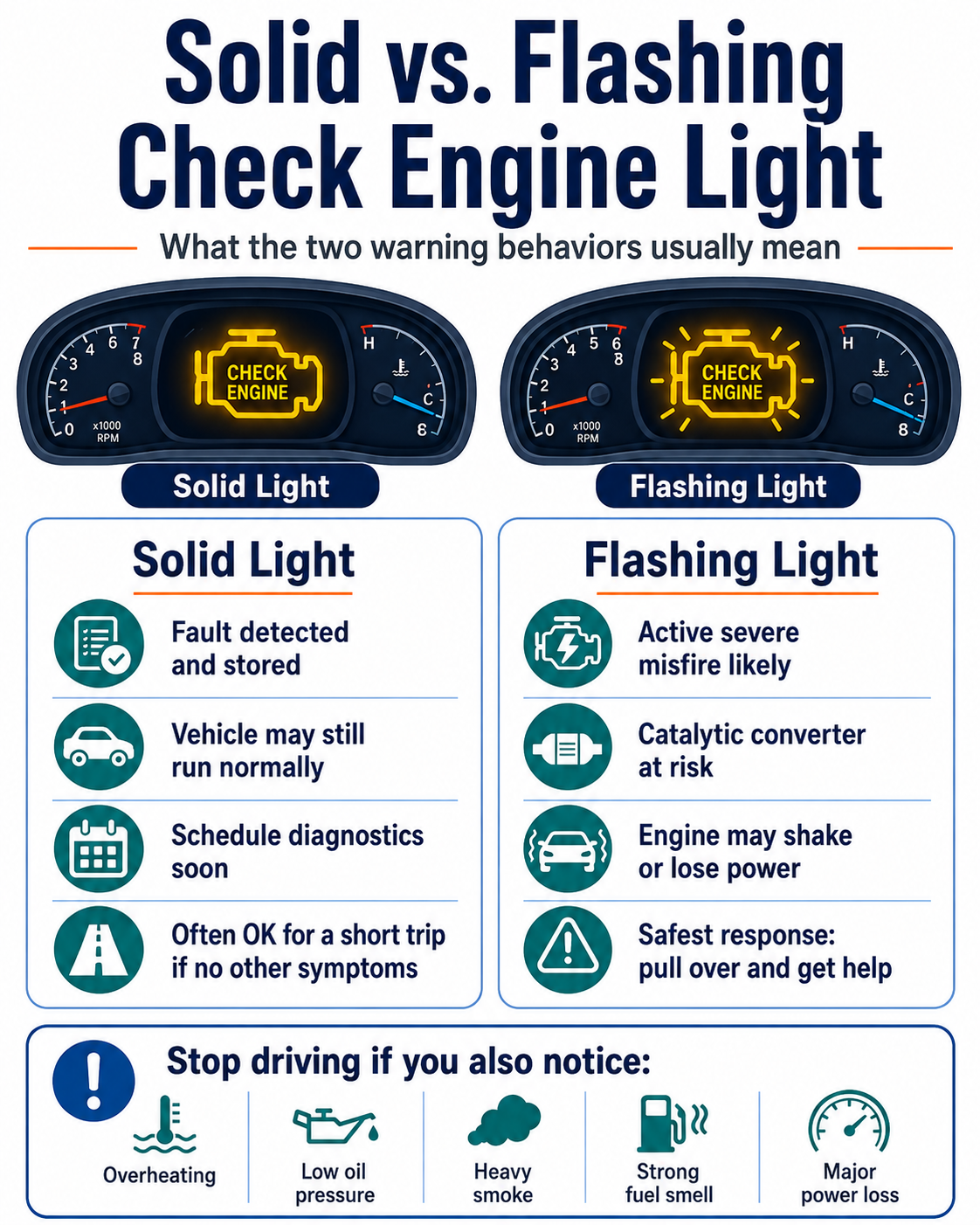
Solid vs Flashing Check Engine Light and When to Stop Driving
A solid check engine light means your vehicle has detected a fault that needs diagnosis. If the engine runs normally and there are no other warnings, a short, cautious trip for service may be reasonable. A flashing check engine light commonly signals an engine misfire severe enough to damage the catalytic converter. Reduce engine load and stop somewhere safe. Persistent flashing or serious symptoms call for shutting off the engine and arranging a tow.
The light’s behavior matters, but so does how your car feels. Severe shaking, overheating, or major power loss can make a solid light urgent, too.
FastLap Auto Repair provides check engine light diagnostics in Oklahoma City to identify the cause and recommend the appropriate repair.
Solid vs Flashing Check Engine Light at a Glance
What Does a Solid Check Engine Light Mean?
A steady check engine light means the vehicle’s onboard diagnostic system, or OBD-II, has detected a problem and stored diagnostic information. The warning may appear even when the car seems to drive normally.
Common causes include:
- A loose, missing, or damaged gas cap on vehicles equipped with one.
- Leaks or faulty components in the system that captures fuel vapors.
- Oxygen sensor or mass airflow sensor problems.
- Spark plug, ignition coil, or fuel-delivery faults.
- Catalytic converter efficiency problems.
- Variable valve timing faults, sometimes related to oil condition or level.
The light alone cannot tell you how expensive the repair will be. It also cannot identify the exact part that needs replacement.
Can I Drive With a Solid Check Engine Light?
If your vehicle runs smoothly, its temperature is normal, and no other warnings are present, a short, gentle trip to a repair shop may be reasonable. Check your owner’s manual and contact the shop for advice. Avoid hard acceleration, towing, and unnecessary trips until the cause is known.
There is no universal safe number of miles to drive with a check engine light. A steady warning can represent many different faults, and normal driving behavior does not prove the problem is harmless.
Stop safely if you notice severe shaking, overheating, substantial power loss, loud knocking, smoke, or a strong fuel smell. Shut off the engine and arrange assistance. These symptoms matter even if the light never flashes.
What Does a Flashing Check Engine Light Mean?
A flashing check engine light while the engine is running commonly indicates a serious misfire. A misfire occurs when one or more cylinders fail to burn the air-fuel mixture correctly. The engine may shake, hesitate, lose power, or idle roughly, although the driver may not always feel obvious symptoms.
During some misfires, unburned fuel enters the exhaust and burns in the catalytic converter. The resulting heat can damage or melt its internal material. Damage can develop quickly, especially if you continue accelerating or put the engine under heavy load.
The catalytic converter helps reduce harmful exhaust emissions. If it is damaged, repairing the original misfire may no longer be the only work required. FastLap’s exhaust system services address exhaust-related concerns when testing shows they need attention.
What to Do When Your Check Engine Light Flashes
- Ease off the accelerator. Avoid high engine speeds, hard acceleration, and additional engine load.
- Find a safe place to stop. Move out of traffic as conditions allow. Do not stop abruptly in a travel lane.
- Shut off the engine once safely parked. Do not keep revving it or leave a badly misfiring engine idling to see whether it clears up.
- Arrange a tow if flashing persists or returns, or the engine runs poorly. Severe shaking, overheating, major power loss, or a strong fuel smell are reasons to leave the engine off.
- Get advice before resuming travel if the flashing stops. Tell the repair shop what happened and follow the vehicle manufacturer’s instructions.
A nearby repair shop does not make continued driving safe when the engine is actively misfiring. If you are unsure whether the car should be driven, contact the shop or roadside assistance from a safe location.
What Causes a Flashing Check Engine Light?
Several faults can cause a misfire. Testing helps separate them before parts are replaced.
Worn spark plugs or failing ignition components. A worn plug, weak ignition coil, or damaged plug wire can prevent reliable ignition. These problems may become more noticeable during acceleration. Spark plug inspection and scheduled replacement may be part of a vehicle tune-up.
Fuel-delivery problems. A malfunctioning injector or inadequate fuel pressure can interfere with combustion. An injector may deliver too much fuel, too little fuel, or an uneven spray. Diagnosis determines whether fuel injection service or another repair is appropriate.
Air leaks and electrical faults. An intake leak can upset the air-fuel mixture. Damaged wiring, connectors, or sensor faults can also contribute to poor engine operation.
Mechanical engine problems. Low cylinder compression, valve damage, incorrect valve timing, or coolant entering a cylinder can cause misfires. These conditions require different repairs from a spark plug or ignition coil fault.
The same type of component can be associated with a solid or flashing light. The warning depends on the fault and operating conditions, so flashing does not identify one specific failed part.
Why Did My Check Engine Light Flash and Then Stop?
A misfire may occur only during acceleration, at certain temperatures, or under a heavy engine load. When those conditions change, the flashing may stop and the light may become solid or turn off.
That change does not confirm that the problem is repaired. Diagnostic information may remain stored even after the engine seems smooth again.
Note whether the engine was cold, whether you were accelerating, and whether it shook or lost power. Share those details with your technician. Avoid deliberately recreating the problem by accelerating hard.
How a Check Engine Light Is Diagnosed
A code scan is the starting point. A trouble code describes a detected condition or affected system; it does not always name the faulty component.
For example, a cylinder misfire code can result from an ignition problem, injector fault, air leak, or loss of compression. Replacing spark plugs without checking the cause may leave the problem unresolved.
Depending on the findings, diagnosis may include checking ignition components, fuel pressure, sensor readings, wiring, and cylinder compression. Technicians may also review stored operating conditions to understand what was happening when the fault occurred.
FastLap’s vehicle diagnostic services help identify the underlying issue before repairs are recommended.
Common Questions About Check Engine Lights
Can a Loose Gas Cap Cause a Flashing Check Engine Light?
A loose gas cap typically causes a steady warning related to fuel-vapor leaks. It is not the usual explanation for a flashing misfire warning. If a steady light appears after refueling, check the cap with the vehicle parked and engine off. Correcting the cap may not turn the light off immediately.
Why Does the Light Flash When I Accelerate?
Acceleration increases engine load and can expose weak ignition components, inadequate fuel delivery, or another problem that is less noticeable at idle. Ease off the accelerator and follow the stopping guidance above. A smooth idle does not rule out a misfire under load.
Is It Normal for the Light to Come On Before Starting?
The check engine light commonly illuminates with the ignition on before the engine starts as a system check. Some vehicles also use engine-off flashing patterns to indicate diagnostic readiness. Consult your owner’s manual for the specific pattern. Flashing while the engine is running requires a different response.
Can an Oil Change Fix a Check Engine Light?
Low, dirty, or incorrect oil can affect certain engine systems, including variable valve timing, but an oil change will not fix every check engine fault. Regular oil changes support engine maintenance; diagnosis determines whether oil condition is related to the warning.
An oil-pressure warning is a separate alert. If it appears while driving, stop safely and shut off the engine. Treat an overheating warning urgently as well, regardless of whether the check engine light is solid or flashing.
Should I Clear the Code or Disconnect the Battery?
Avoid clearing codes before diagnosis. Doing so can erase useful information and reset emissions readiness checks without repairing the fault. A light that disappears after a reset is not proof that the vehicle is fixed.
Check Engine Light Diagnostics in Oklahoma City
FastLap Auto Repair helps Oklahoma City drivers investigate solid and flashing check engine lights, rough running, hesitation, and loss of power. Visit us at 5930 W Memorial Rd, Oklahoma City, OK 73142, or call 405-322-5485 to discuss the symptoms and arrange service.
If your light is flashing or the vehicle is running poorly, call before driving to the shop so you can discuss whether it should be towed.