
Flashing vs. Solid Check Engine Light: What Does It Mean?
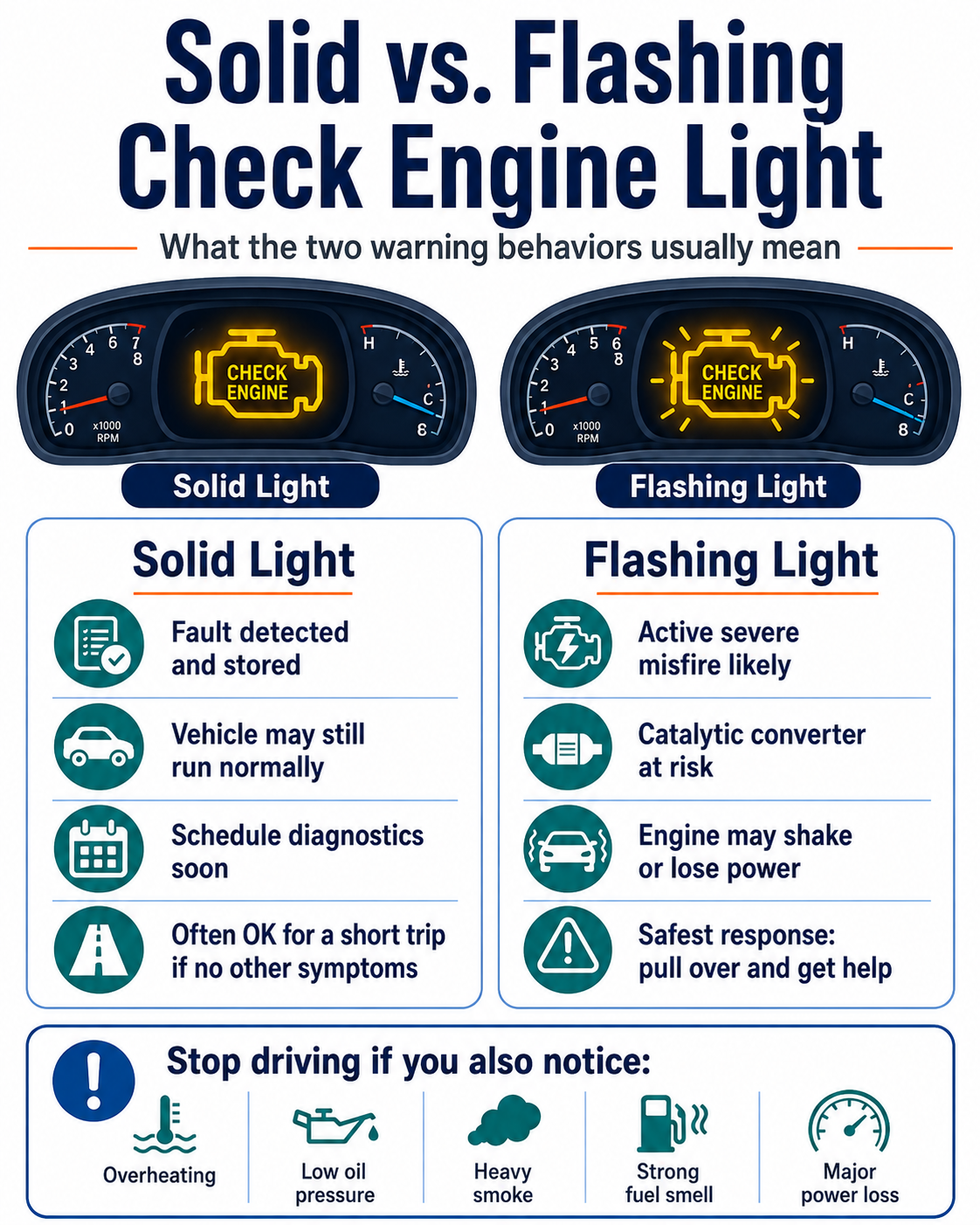
Few dashboard warnings create as much uncertainty as the check engine light. One of the most important things to notice is whether the light is solid or flashing, because the two warnings can indicate very different levels of urgency.
A solid check engine light means your vehicle’s diagnostic system has detected a problem that should be investigated. The cause could be relatively minor, such as a loose gas cap, or related to the ignition, fuel, emissions, sensors, or engine-management system.
A flashing check engine light is more serious and commonly indicates an active engine misfire. Continuing to drive during a severe misfire can potentially damage the catalytic converter and lead to a more expensive repair.
If your check engine light is on, FastLap Auto Repair provides professional check engine light diagnostics in Oklahoma City to identify the cause and determine the appropriate repair.
Solid vs. Flashing Check Engine Light: What’s the Difference?
| Check Engine Light | What It Usually Means | What You Should Do |
|---|---|---|
| Solid | Your vehicle has detected and stored a fault. The vehicle may still appear to run normally. | Schedule diagnostic service soon and monitor the vehicle for additional symptoms. |
| Flashing | An active misfire may be occurring, potentially allowing unburned fuel into the exhaust system. | Reduce engine load, move to a safe location, and arrange professional assistance if the flashing continues or the vehicle runs poorly. |
Why Is My Check Engine Light Flashing?
A flashing check engine light commonly means the engine computer has detected an active misfire that requires attention. A misfire occurs when one or more cylinders fail to burn the air-fuel mixture correctly.
When combustion doesn’t occur properly, unburned fuel may enter the exhaust system. If enough reaches the catalytic converter, temperatures can rise significantly and potentially damage the converter.
There are several possible causes of an engine misfire, which is why diagnostic testing is important before replacing parts.
Common Causes of a Flashing Check Engine Light
Worn or Fouled Spark Plugs
Spark plugs ignite the air-fuel mixture inside the engine’s cylinders. As spark plugs wear or become contaminated, they may struggle to create a consistent spark, especially during acceleration or under heavier engine loads.
Depending on your vehicle’s mileage and maintenance history, spark plug inspection or replacement may be part of a car tune-up in Oklahoma City.
Failing Ignition Coils
Ignition coils provide the voltage needed for the spark plugs to ignite the air-fuel mixture. A weak or failing coil can cause intermittent or continuous misfires.
Symptoms may include rough idling, hesitation, reduced acceleration, engine shaking, or a flashing check engine light.
Damaged Spark Plug Wires or Ignition Components
On vehicles equipped with spark plug wires or other external ignition components, deterioration can interfere with the electrical energy reaching the spark plug. Heat, age, moisture, and physical damage can all contribute to ignition problems.
Fuel Injector Problems
Each cylinder needs the correct amount of fuel for proper combustion. A clogged, leaking, or malfunctioning fuel injector can cause the mixture in a cylinder to become too rich or too lean, potentially resulting in a misfire.
If diagnostic testing points to a fuel-delivery issue, fuel injection service may be recommended.
Low Fuel Pressure
Low fuel pressure can prevent the engine from receiving enough fuel, particularly during acceleration or when the engine is under load. Possible causes include a weak fuel pump, restricted fuel filter, fuel-pressure regulator problem, or another issue within the fuel-delivery system.
Intake or Vacuum Leaks
Air entering the engine without being properly measured can create a lean air-fuel mixture. Depending on the location and severity of the leak, this can cause rough idling, hesitation, reduced performance, or engine misfires.
Mechanical Engine Problems
Less commonly, a flashing check engine light can result from a mechanical problem that prevents a cylinder from producing normal compression. Possible causes include valve problems, worn internal components, head-gasket failure, incorrect valve timing, or damaged timing components.
These problems require professional testing because a diagnostic trouble code alone cannot determine whether the underlying issue is related to ignition, fuel delivery, electrical systems, or the engine itself.
Coolant Entering a Cylinder
A head-gasket problem or another internal engine issue can sometimes allow coolant to enter a combustion chamber, interfering with normal combustion and causing a misfire.
Other symptoms may include coolant loss, overheating, white exhaust smoke, or rough engine operation. If your vehicle is losing coolant or overheating, the cooling system should be inspected.
Electrical or Computer-Control Problems
Modern engines depend on sensors, wiring, modules, and computer-controlled components to manage ignition, fuel delivery, airflow, and emissions. Wiring faults, damaged connectors, sensor problems, or control-system issues can sometimes contribute to a misfire or check engine warning.
Why Can a Flashing Check Engine Light Damage the Catalytic Converter?
The catalytic converter is designed to process exhaust gases after combustion. When an engine misfires, some of the fuel entering the affected cylinder may pass into the exhaust without being burned.
That unburned fuel can create excessive heat inside the catalytic converter. Continued driving during a severe misfire can potentially overheat and damage it.
This is one reason a flashing check engine light should be treated differently from a solid light. Addressing the underlying misfire quickly may help prevent an ignition or fuel-system problem from contributing to a more expensive exhaust system repair.
Can I Drive With a Flashing Check Engine Light?
Continuing to drive with a flashing check engine light is generally not recommended. The appropriate response depends on how the vehicle is behaving and the driving conditions around you.
If the check engine light begins flashing:
- Reduce engine speed and avoid hard acceleration.
- Do not tow or place additional load on the engine.
- Pay attention to shaking, loss of power, overheating, unusual noises, or strong fuel odors.
- Move to a safe location as soon as conditions allow.
- If the light continues flashing or the vehicle is running poorly, arrange professional assistance rather than continuing to drive.
A flashing light that stops does not necessarily mean the problem has disappeared. The misfire may occur only under certain engine speeds, temperatures, or loads, and diagnostic information may remain stored in the vehicle’s computer.
What Does a Solid Check Engine Light Mean?
A solid check engine light means the vehicle’s onboard diagnostic system has detected a fault and stored information about it. Unlike a flashing light, a steady check engine light does not necessarily indicate an active severe misfire.
The cause can range from a relatively minor emissions issue to a developing engine, ignition, fuel, sensor, or electrical problem.
If your vehicle otherwise seems to be driving normally, a solid check engine light may not require you to immediately stop driving. However, the warning should still be diagnosed rather than ignored.
Common Causes of a Solid Check Engine Light
Loose or Damaged Gas Cap
A loose, missing, or damaged gas cap can allow fuel vapors to escape and trigger an evaporative-emissions fault. Checking that the cap is properly tightened is a simple first step when a solid check engine light appears.
Oxygen Sensor Problems
Oxygen sensors monitor oxygen levels in the exhaust and provide information the engine computer uses to adjust fuel delivery. A failing sensor can affect emissions, fuel efficiency, and engine performance.
Mass Airflow Sensor Problems
The mass airflow sensor helps determine how much air is entering the engine. Incorrect readings can affect the air-fuel mixture and may cause hesitation, rough running, poor fuel economy, or a check engine warning.
Evaporative Emissions System Leaks
The EVAP system captures fuel vapors and prevents them from escaping into the atmosphere. Small leaks, damaged hoses, valves, or other EVAP components can trigger a solid check engine light even when the vehicle appears to run normally.
Catalytic Converter Efficiency Codes
A check engine light may illuminate when the vehicle detects that catalytic converter efficiency has fallen below an expected threshold. However, the converter itself isn’t always the original cause. Misfires, fuel-control issues, oil consumption, exhaust leaks, or sensor problems may contribute to catalyst-related codes.
Variable Valve Timing Problems
Many modern engines use variable valve timing systems that depend on proper oil pressure and clean engine oil. Low oil levels, dirty oil, incorrect oil viscosity, sludge, or a failing valve-timing component can interfere with the system and trigger a check engine light.
Because these systems rely on proper lubrication and oil pressure, staying current with routine oil changes in Oklahoma City can help support proper engine operation. Diagnostic testing should also consider the vehicle’s maintenance history and current oil condition.
Why Did My Check Engine Light Flash and Then Stop?
A check engine light that flashes temporarily and then becomes solid or turns off may indicate an intermittent misfire. The problem may occur only under specific operating conditions, such as hard acceleration, higher engine speeds, cold starts, or heavy engine loads.
Even if the flashing stops, the vehicle’s computer may have stored a diagnostic trouble code or misfire information that can help a technician determine what happened.
If you experienced shaking, hesitation, reduced power, or other symptoms while the light was flashing, having the vehicle diagnosed is a good idea even if it seems to be running normally again.
How Is a Check Engine Light Diagnosed?
Reading a diagnostic trouble code is only the beginning of the process. A code identifies the system or condition the vehicle detected, but it doesn’t always identify the exact component that should be replaced.
A proper diagnosis may involve reviewing:
- Stored diagnostic trouble codes
- Freeze-frame information
- Misfire data
- Fuel trims
- Sensor readings
- Ignition performance
- Fuel pressure
- Wiring and electrical connections
- Other vehicle-specific information
For example, a misfire code doesn’t automatically mean the spark plugs are bad. The actual cause could involve an ignition coil, fuel injector, vacuum leak, wiring issue, fuel-delivery problem, or mechanical engine condition.
FastLap provides vehicle diagnostic services in Oklahoma City to help identify the underlying cause before repairs are recommended.
Can Regular Maintenance Help Prevent Check Engine Light Problems?
Not every check engine light can be prevented, but keeping up with routine maintenance can help reduce certain problems and give technicians an opportunity to identify developing issues earlier.
Services such as oil changes, fluid inspections, spark plug replacement, filter replacement, and other manufacturer-recommended maintenance can help keep important engine systems operating properly.
FastLap provides preventative maintenance in Oklahoma City based on your vehicle’s mileage, condition, service history, and manufacturer recommendations.
Frequently Asked Questions About Check Engine Lights
Why is my check engine light flashing?
A flashing check engine light commonly indicates an active engine misfire. Because a severe misfire can allow unburned fuel into the exhaust and potentially damage the catalytic converter, reduce engine load and have the vehicle inspected as soon as possible.
Can I drive with a flashing check engine light?
Continuing to drive with a flashing check engine light is generally not recommended. If the engine is shaking, losing power, overheating, smelling strongly of fuel, or the light continues flashing, move to a safe location and arrange professional assistance.
What does a solid check engine light mean?
A solid check engine light means the vehicle has detected and stored a fault. If the vehicle is otherwise operating normally, the issue may not require an immediate tow, but diagnostic service should be scheduled.
Why did my check engine light flash and then stop?
A check engine light that flashes and then stops may indicate an intermittent misfire that occurs only under certain driving conditions. Even if the light stops flashing, diagnostic information may remain stored and the underlying problem should still be investigated.
Can a bad spark plug cause a flashing check engine light?
Yes. Worn or fouled spark plugs can cause an engine misfire, particularly during acceleration or under heavy engine load. Ignition coils, fuel injectors, wiring problems, fuel-delivery issues, and mechanical engine problems can cause similar symptoms.
What Should You Do If Your Check Engine Light Is Flashing?
If your check engine light begins flashing while you’re driving, take the warning seriously. A flashing light commonly indicates an active engine misfire that can send unburned fuel into the exhaust system and potentially damage the catalytic converter.
If the vehicle is shaking, losing power, running roughly, producing unusual smells, or showing other serious symptoms, find a safe place to stop driving and arrange for the vehicle to be inspected.
A flashing check engine light may be associated with problems involving:
- Worn or damaged spark plugs
- Faulty ignition coils
- Fuel injector problems
- Fuel-delivery issues
- Air or vacuum leaks
- Electrical or wiring faults
- Mechanical engine problems
The warning light alone doesn’t identify which component has failed. Professional vehicle diagnostics can help determine why the misfire or other fault is occurring before parts are replaced.
Can a Flashing Check Engine Light Damage the Catalytic Converter?
Yes. An active engine misfire can allow unburned fuel to enter the exhaust system. That fuel may cause the catalytic converter to overheat, potentially damaging an expensive emissions component.
This is one reason a flashing check engine light should be treated differently from a light that remains steadily illuminated.
Can low or dirty engine oil cause a check engine light?
In some vehicles, low, dirty, or incorrect engine oil can interfere with systems such as variable valve timing and contribute to a check engine warning. However, many different problems can trigger the light, so the vehicle should be properly diagnosed rather than assuming an oil change will resolve it.
Check Engine Light Diagnosis in Oklahoma City, OK
FastLap Auto Repair provides check engine light repair and diagnostics in Oklahoma City for drivers dealing with solid or flashing warning lights, rough running, poor acceleration, or unexplained powertrain codes.
If diagnostic testing identifies a mechanical or electrical problem that requires repair, FastLap also provides comprehensive auto repair in Oklahoma City.
Don’t ignore a check engine warning or replace parts based on a trouble code alone. Contact FastLap Auto Repair to schedule an inspection and find out what’s actually causing the warning light.