
Car AC Blowing Hot Air? Causes and Quick Fixes for Cool Comfort

Imagine the feeling of hot air blowing on your face as you turn on the car’s AC in the scorching summer heat. It’s enough to send chills down your spine (ironic, isn’t it?).
If this scenario worries you, you have landed on the right page! We will help you tackle this problem so that even the thought of it doesn’t distress you. Let’s dive into the methods to tackle this problem by identifying the possible causes behind it.
WHY IS YOUR CAR’S AC BETRAYING YOU?
It is an utter betrayal to get knocked off by hot air while you were prepared to be welcomed by cool breezes from the AC.
It is important to understand the reasons behind this unintended betrayal so that you may fix them and move on:
- Insufficient Refrigerant Levels: Refrigerant absorbs heat from the air inside the car and releases it outside. This creates a “cooling effect” in the car. But, low levels of refrigerant disrupt the process, leading to hot air being released inside the car instead. This is usually caused by leaks in the system or damaged components.
- Faulty Compressor: You must have heard of the word “compressor” often pertaining to its importance in the AC system. A compressor compresses the refrigerant so that it circulates throughout the system. A fault in the compressor impacts the circulation of refrigerant leading to uninvited hot air inside the car. You may encounter squeaky noises and weird vibrations in the car AC system due to a faulty compressor.
- Issues with the Condenser: The condenser releases heat from the refrigerant, allowing the air to cool down. The most common problems with the condenser arise due to clogs and leaks. Dirt and insects clog and obstruct the airway of the condenser causing insufficient heat outflow.
- Malfunction of the Blower Motor: The blower motor literally “blows” cool air through the AC vents across your car’s inside. Its malfunction leads to reduced cool air inflow and an increase in the circulation of hot air. Several indications signal the blower motor malfunction. The malfunction causes reduced airflow through the vents. You may also hear squeaky voices from the AC system.
Now that the common causes are identified, you must be wondering about ways to solve them. Your search ends here. We have brainstormed the best fixes for this issue. So, are you ready to enter the perfect world where hot air inflow is unknown to car AC?
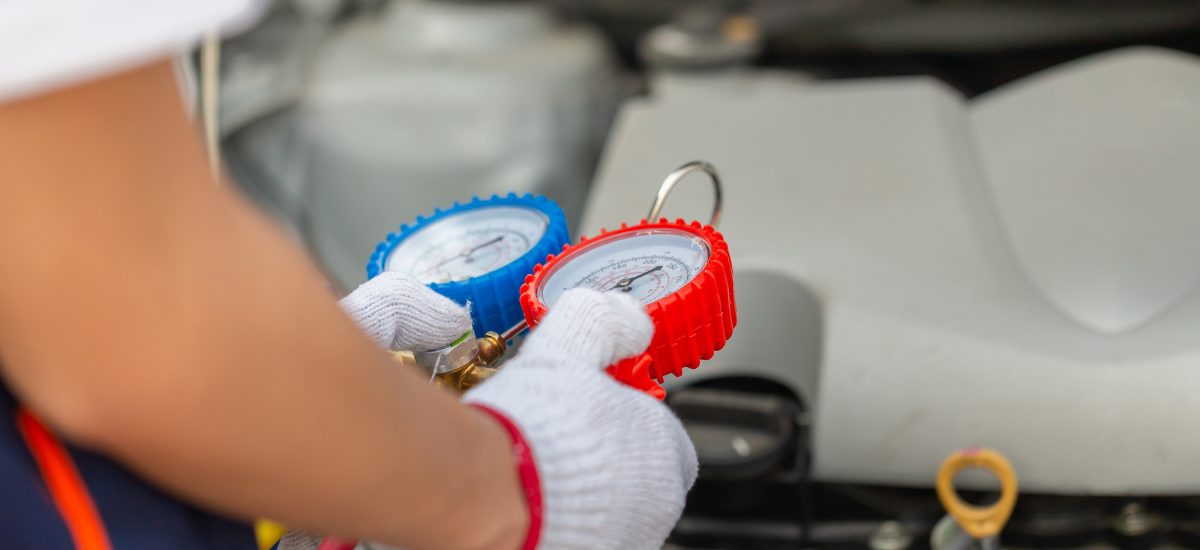
CAR AC REPAIR SERVICE – EXPERT FIXES
We don’t want faulty AC to ruin your driving experience. Therefore, we have compiled the appropriate fixes for each identified cause above:
- Refilling Refrigerant: restores refrigerant level and thus maintains cooling.
- Repairing or Replacing Compressor: allows compressing of the refrigerant for proper circulation.
- Cleaning or Repairing Condenser: ensures optimal heat dissipation for AC’s smooth functioning.
- Replacing the Blower Motor: restores efficient airflow leading to effective cooling.
If any of these fixes seem daunting to you, let us tell you that you don’t have to do it by yourself at all. You took a sigh of relief right now, didn’t you?
An expert car AC repair shop is the one-stop solution for all your AC-related problems. From refrigerant leaks to compressor malfunctions, it handles all car AC-related issues.
To simplify it further, let’s understand the two-step process equipped by experts at a car AC repair shop. They diagnose the root cause and fix it right away through highly innovative cutting-edge technology.
MAINTENANCE ESSENTIALS FOR CAR’S AC
We are certain that you don’t want to encounter this annoying AC problem again, do you? To ensure that it doesn’t happen again, we recommend you look into the maintenance tips compiled by us.
Here are some tips for the car AC maintenance starter pack:
- Schedule regular inspections with professionals to prevent any leaks, clogs, or tears in the components. An expert auto repair shop can get you started with regular check-ups as per need to make sure your AC system never backfires again.
- Clean the condenser and evaporator to make sure it doesn’t get clogged by debris or dust. Use a mild stream of water or compressed air to unblock the dust obstructions in the airway. This ensures that airflow remains uninterrupted, and the cooling is intact.
- Check air filters daily and replace them if obstructed, otherwise, the airflow would be reduced. This impacts cooling and you experience hot air inflow.
- Run your car’s AC system regularly for a few minutes even in the chilly winter seasons. This keeps the seals lubricated and ensures the proper functioning of the system. It also allows you to detect any early signs of malfunctioning of the AC system such as strange noises or odors.
- And last but not least: Follow the maintenance schedule provided by your personal car caretaker.

CHOOSE A RELIABLE CAR AC REPAIR SHOP
It is important to choose the right car air conditioning experts for your car. Our experts at Fastlap Auto Repair Shop guarantee reliability, efficiency, and the use of cutting-edge technology. We promise to deliver the best results and make sure your car rides are breezy.
Contact us now to book an appointment for your car’s air conditioning service so that you never have to face the hot air brushing against your face ever again!