Tire Balancing in Oklahoma City, OK
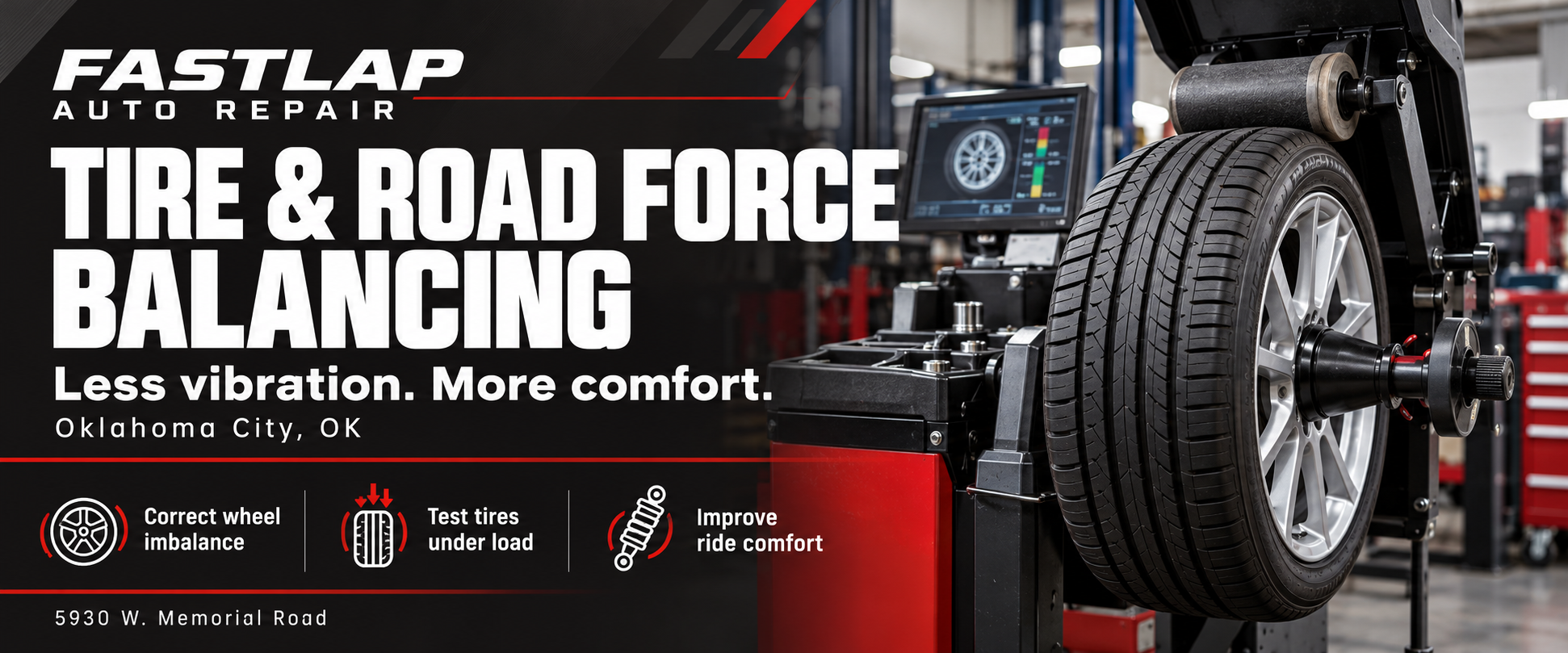
A steering wheel that shakes at highway speed can make your daily commute uncomfortable. You might notice the vibration after installing new tires, following a pothole impact, or when returning to faster roads after several days of driving around town. Tire imbalance is one possible cause, but the right solution starts with understanding why the vehicle is shaking.
At FastLap in Oklahoma City, we provide tire balancing and road force balancing to help address tire and wheel vibration. Visit our shop at 5930 W. Memorial Road for help with an uncomfortable ride, a new tire installation, or a vibration that has continued after previous balancing.
Whether you drive a commuter car, SUV, pickup, or performance vehicle, our team can help determine what your tires need and whether another component requires attention
View Deals & Coupons
How Tire Balancing Improves Your Ride
A mounted tire and wheel rarely have perfectly even weight distribution. Small differences in the tire’s construction, the wheel, and the assembled components can create an imbalance. As the assembly rotates, that imbalance can produce a vibration that becomes more noticeable at certain speeds.
During computerized balancing, the tire and wheel assembly is mounted on a balancing machine. The equipment measures the imbalance and identifies where corrective weights should be placed. Proper balancing helps reduce vibration caused by uneven mass distribution and supports a more comfortable ride.
Balancing is part of installing new tires, but an existing set may also need attention. Lost wheel weights, tire wear, and changes following tire service can affect how smoothly an assembly rotates. If your vehicle previously rode well and has developed a shake, a balance check may be appropriate.
Road Force Balancing in Oklahoma City
FastLap uses road force balancing equipment to investigate ride problems beyond conventional weight imbalance.
Road force testing applies a loaded roller against the rotating tire to measure how the assembly behaves under pressure. This can reveal variations in tire stiffness and rolling uniformity that may cause vibration even when conventional balance readings appear acceptable.
Depending on the findings, repositioning the tire on the wheel—a process called match mounting—may improve the assembly’s ride characteristics. The measurements can also help identify a tire or wheel that requires further attention.
This distinction matters when a vehicle has already been balanced but still does not feel right. Adding or repositioning weights addresses mass imbalance; it does not necessarily address how uniformly the tire rolls under load.
If your vehicle still shakes after previous balancing, tell us what service was performed and whether it changed the vibration.
Signs Your Tires and Wheels Need Inspection
A tire and wheel inspection is worthwhile when you notice:
- Steering wheel vibration that becomes more pronounced as speed increases.
- Shaking through the seat or floor while cruising.
- A new vibration after tire replacement, rotation, or repair.
- A change in ride quality after hitting a pothole or curb.
- Uneven tread wear or a wheel weight that appears to be missing.
These symptoms do not all have the same cause. A vibration that occurs primarily while braking may involve the braking system, while shaking under acceleration may require a drivetrain inspection.
Before your appointment, note when the vibration begins, where you feel it, and whether it changes with speed. That description helps us investigate the complaint more effectively.
Tire Balancing Versus Alignment and Rotation
Balancing, alignment, and rotation contribute to tire performance in different ways.
Balancing corrects uneven weight distribution in each tire and wheel assembly. Alignment adjusts wheel angles to the vehicle’s specifications. Rotation moves tires between approved positions to help manage differences in wear.
Your vehicle may benefit from more than one service, but one does not automatically replace another. If you notice pulling, an off-center steering wheel, or unusual tread wear alongside vibration, mention those concerns when arranging service.
For worn or damaged tires, explore our tire selection in Oklahoma City. Balancing can improve the operation of a serviceable assembly, but it cannot restore missing tread or repair structural tire damage.
Tire Balancing Questions
How often should tires be balanced?
Have tires balanced when they are installed and have their balance checked when vibration develops. Additional service should follow the vehicle and tire manufacturer’s guidance and the condition of the assemblies.
Can new tires need road force balancing?
Yes. A new tire and wheel combination can have variations that affect ride quality. Road force testing can help investigate a vibration that remains after conventional balancing.
Does balancing fix every steering wheel shake?
No. Tire imbalance is one possibility, but wheel damage, tire irregularities, and mechanical concerns can create similar symptoms. Inspection helps determine the appropriate correction.
Schedule Tire Balancing at FastLap
You do not need to wait until a vibration becomes severe to have it checked. Addressing a change in ride quality gives you a clearer picture of your tires, wheels, and related components.
Contact FastLap in Oklahoma City to schedule tire balancing or discuss road force balancing at our W. Memorial Road location.
Schedule Tire Balancing
Explore Auto Repair Financing
